Knowee Writing
An AI co-writer that students actually dare to cite.
- Role
- Lead Solo Designer
- Timeline
- ~3 months · 2025
- Scope
- Brand · 3D IP · Web App · Mobile · Onboarding · Paywall
- Year
- 2025
Case at a glance
What it is, what was wrong, and what shipped — before the screenshots.
What this is
The project
Knowee Writing is xBuddy's live AI product for university-level academic writing — web and mobile, public at knowee.ai. I was the lead designer for the 2.0 redesign: brand, Writer app, onboarding, pricing, and the editor where students actually write.
What was broken
The problem
Students needed help writing, but generic AI tools created fake citations and "cheap SaaS" vibes that hurt trust with professors. The category also parked AI in a side chat, so writing and AI stayed in two different mental zones.
What I did
The action
I moved every AI action to the text selection (Ask AI, outline, citations, references), paired it with an editorial visual system and transparent pricing, and shipped a brand IP so the product had a face, not just a feature list.
Outcomes & evidence
Live
2.0 shipped to production (knowee.ai)
Public product — verify anytime on the live site.
1000+
Universities named on marketing as reach signal
Copy on live marketing pages; not independently audited here.
Reframe
Positioning shift: from shortcut AI to cite-ready co-writer
Qualitative — retention & citation quality tracked by product; ask me for the latest deck.
Narrative — 01
Background
Knowee is xBuddy's AI academic writing platform, used by students across 1,000+ universities — Cambridge, Caltech, EPFL, ETH, UCL, Bristol, and the rest of the crowd that grades on rubric and cites on style guide.
I led the 2.0 redesign end-to-end, solo on the design side: brand, Writer web app, onboarding, pricing, mobile, and — most importantly — the editor's AI interaction layer. The brief was simple and unreasonable: earn the sentence sitting on the homepage. 【100% real academic sources.】
Narrative — 02
Problem
The category's default answer to "AI for writing" was a chat window with a 'Generate essay' button. Three problems compounded:
1. 【AI content was untrusted by the people grading it.】 Students wanted help, but pasting GPT output into a paper meant hallucinated citations, AI-detector flags, and a bad conversation with their professor.
2. 【The category framed itself as a shortcut.】 Traffic was easy, retention wasn't — the students who actually write papers (and pay) wanted a tool that signalled craft, not hacks.
3. 【The AI sat off to the side.】 The default pattern everywhere was a right-hand chat panel: writing lived in one column, the AI in another. Users learned to context-switch instead of to write.
Evidence
Screens, flows, and brand artifacts — the visual proof behind the narrative above.
01 — Brand landing
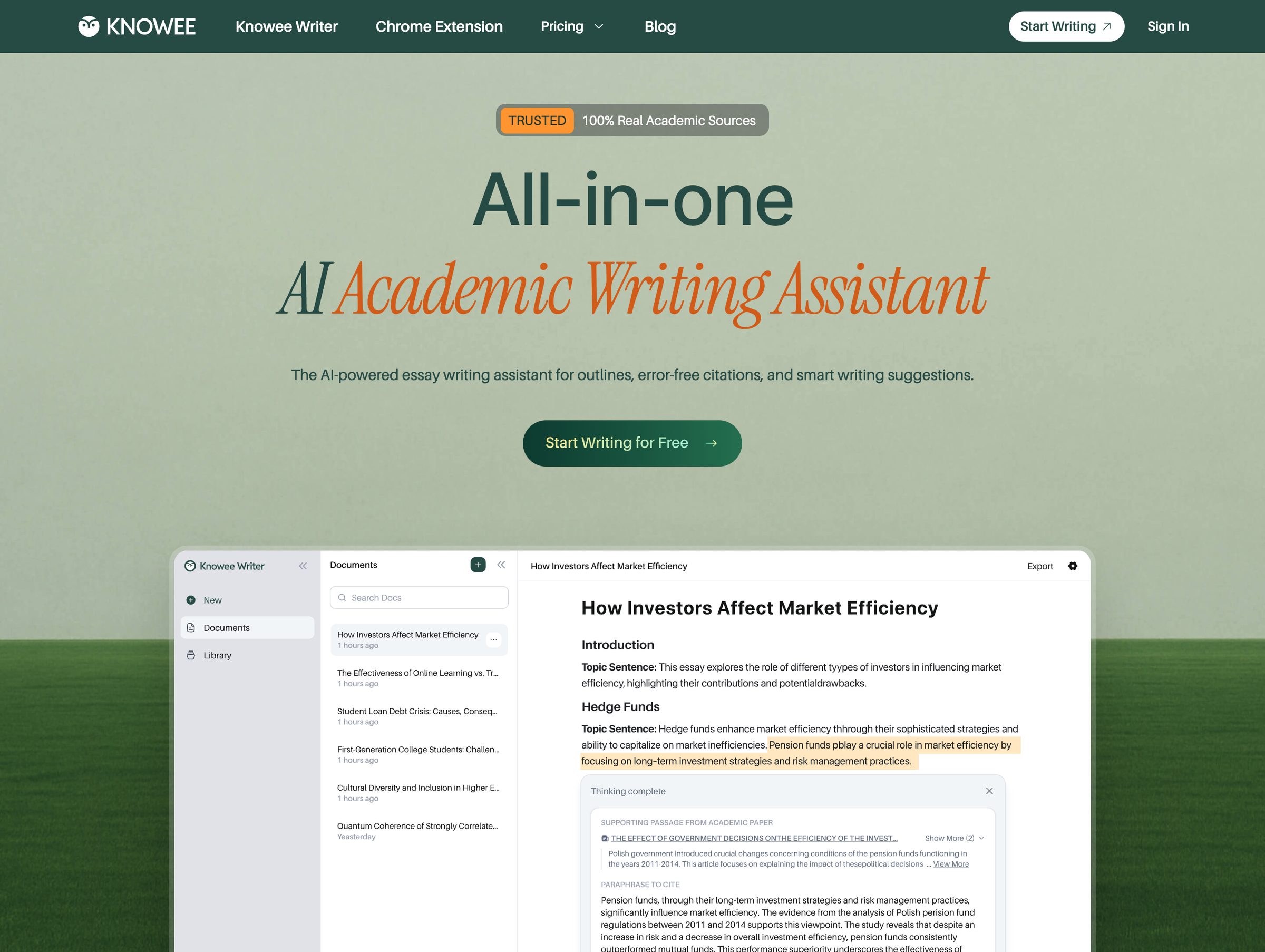
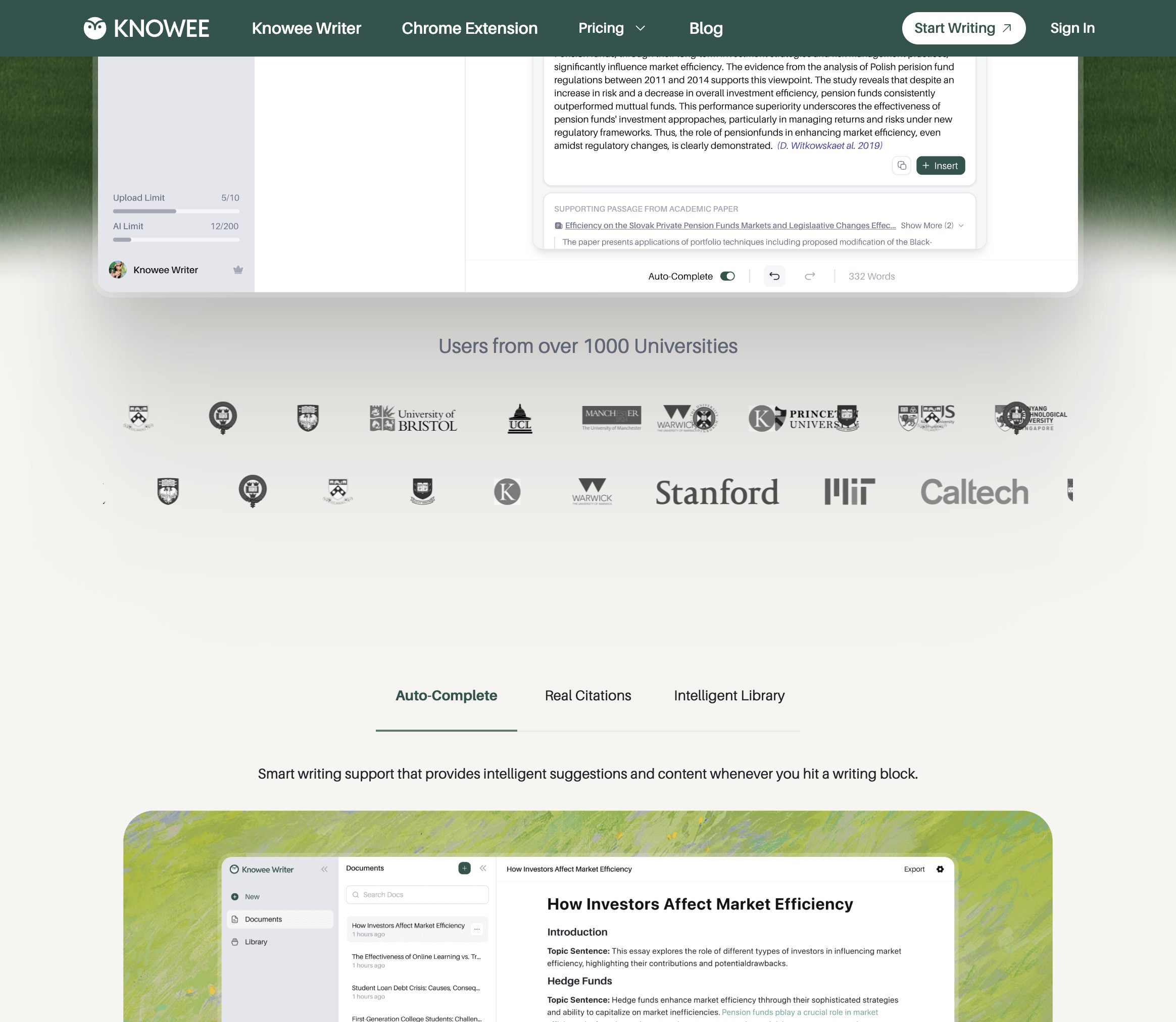
All-in-one, with a face
Homepage hero is a single promise — "All-in-one AI Academic Writing Assistant" — set in Instrument Serif italic over a quiet sage. The editor mockup anchors the scroll and introduces the selection-driven AI vocabulary before a word of marketing copy.
02 — Brand IP
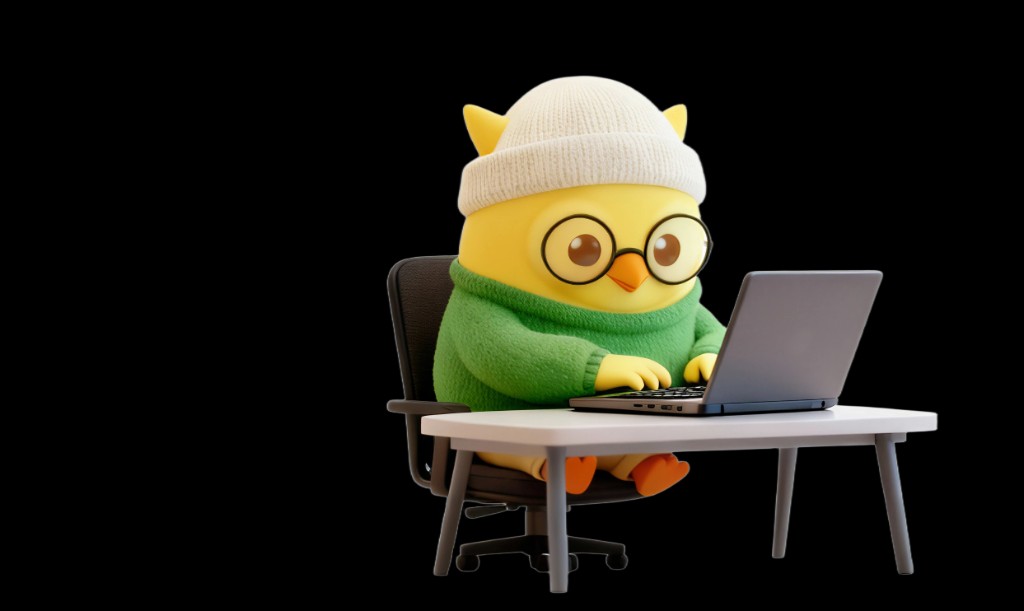
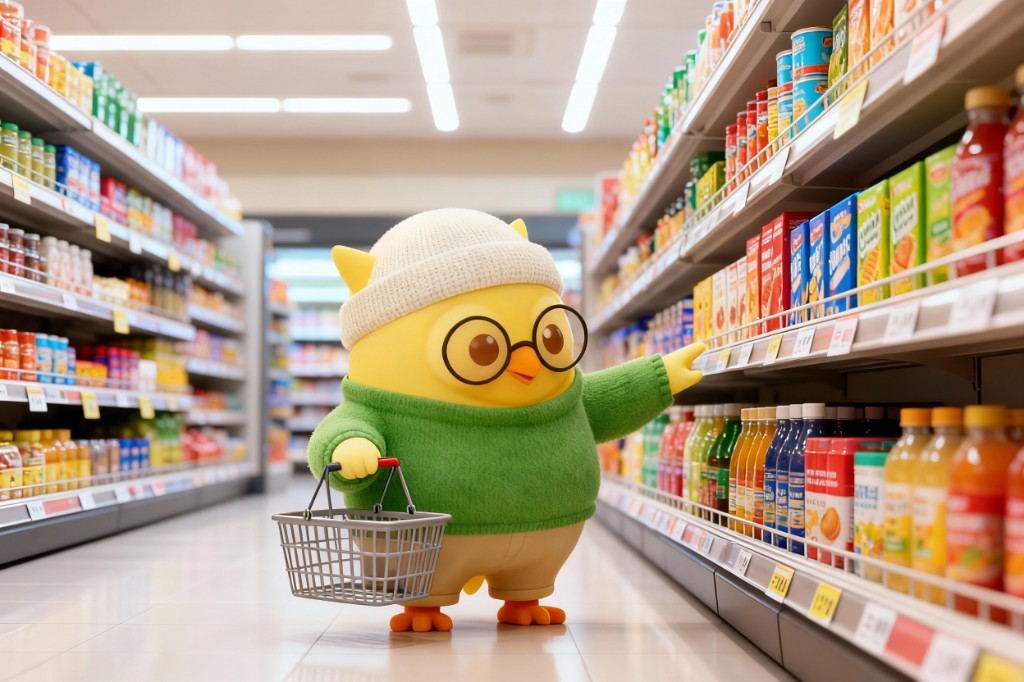
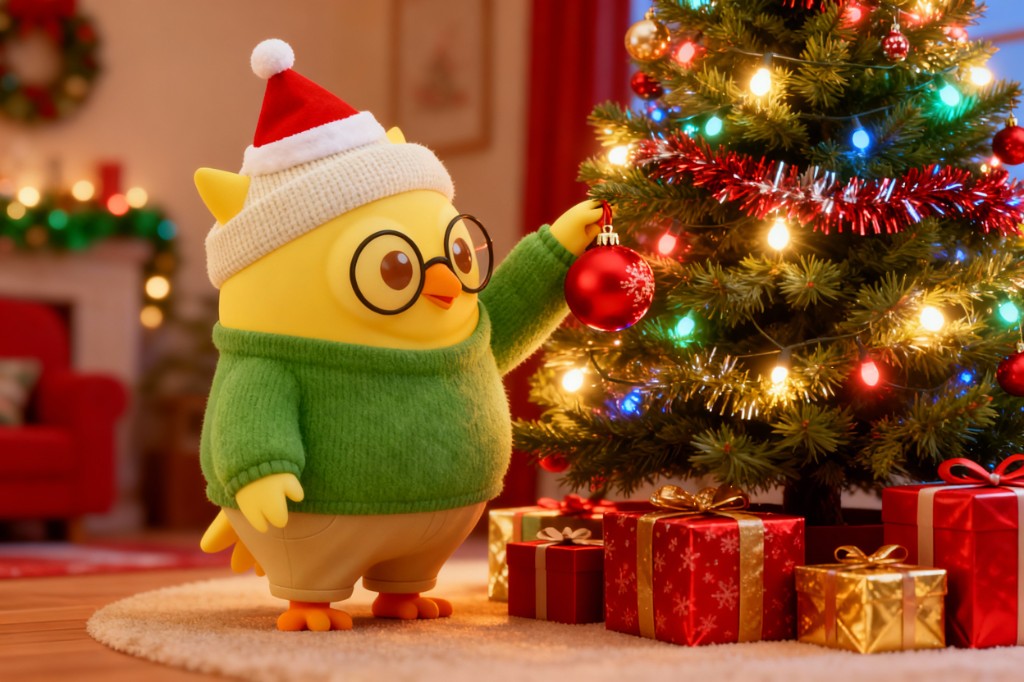
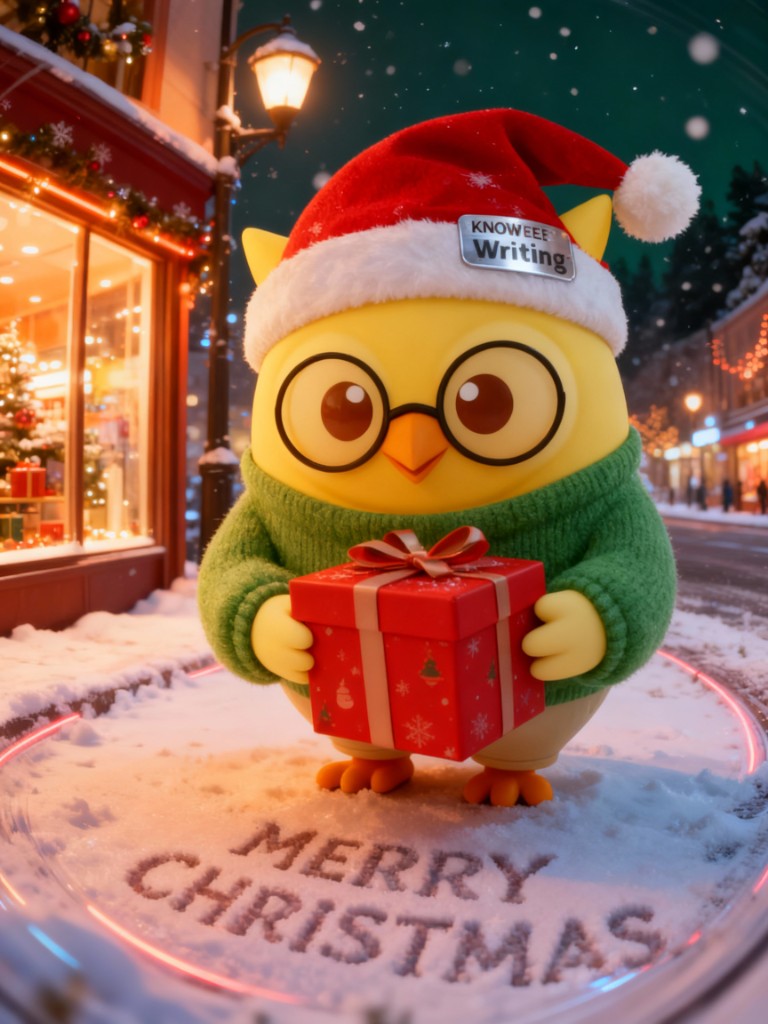
A face for the co-writer
3D mascot for Knowee Writing — same owl, glasses, and knit green sweater across study scenes, seasonal beats, and a cut-out hero for dark UI. Built to feel tutor-like and premium, not toy-cute.


03 — In-editor AI
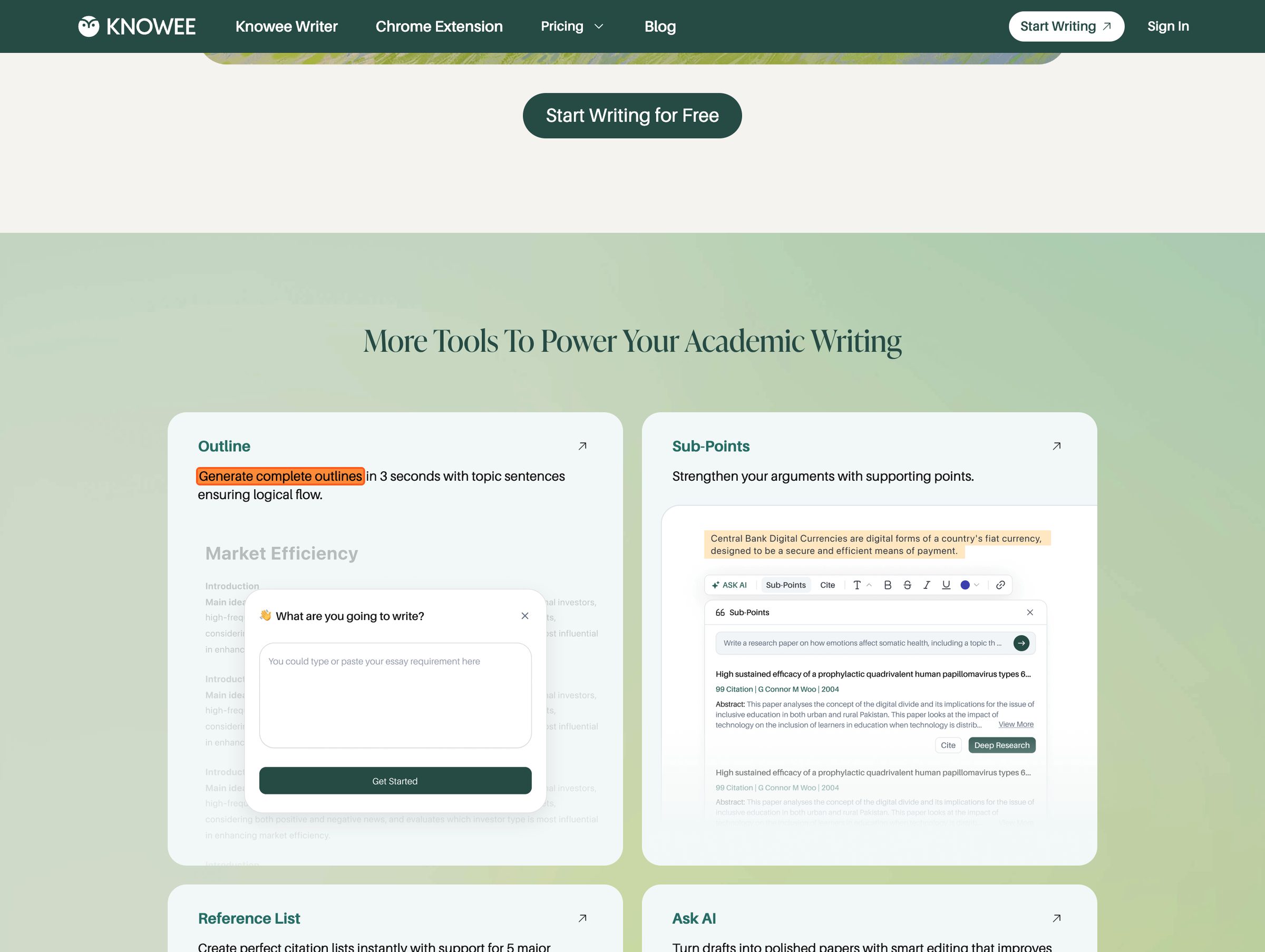
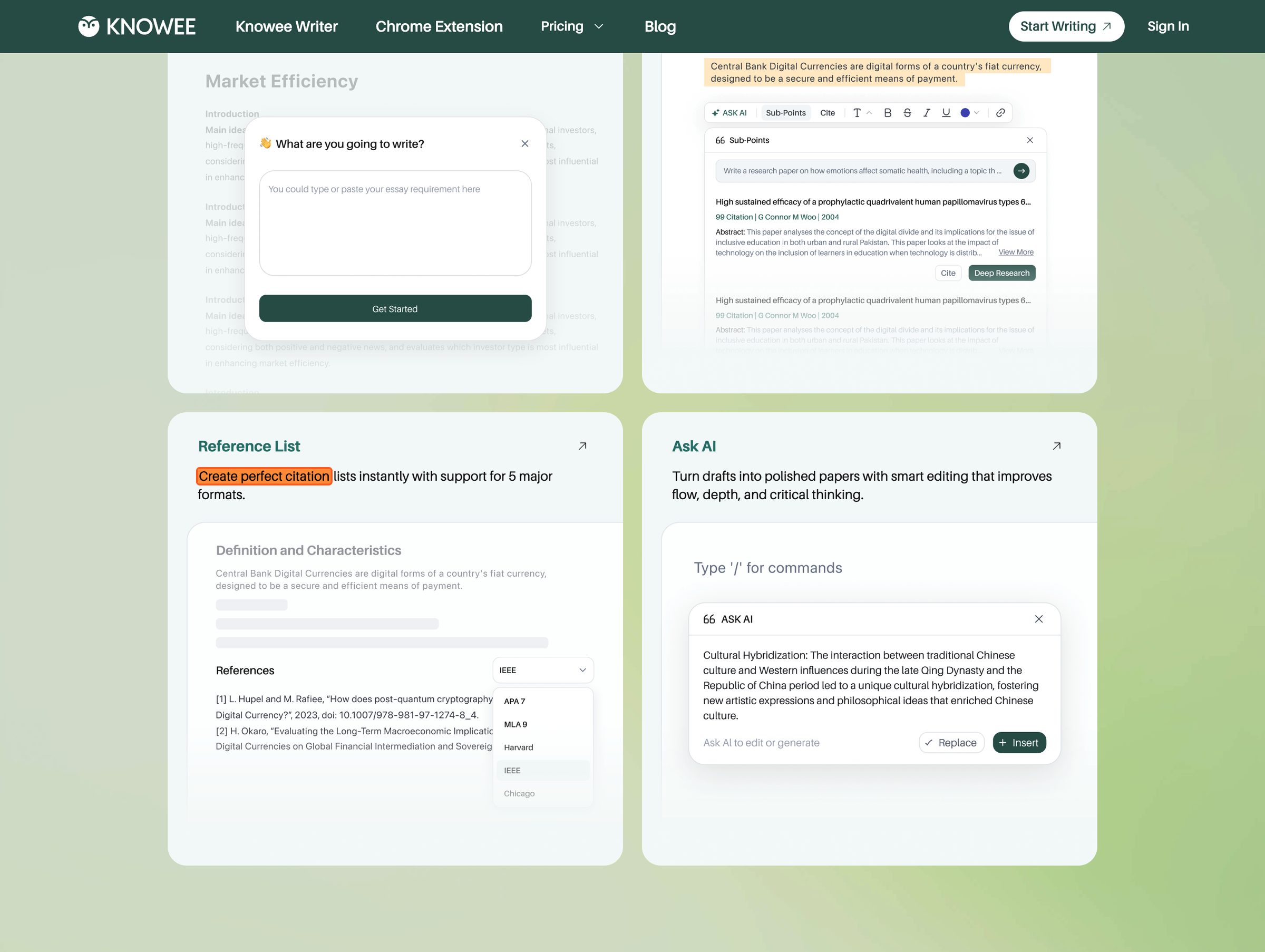
Four affordances, one gesture
Outline, Sub-Points, Reference List, Ask AI — each is a module the writer can reach for, each stays anchored to the current selection, each brings its own receipts. I built them as one visual pattern so the second one learned is free.
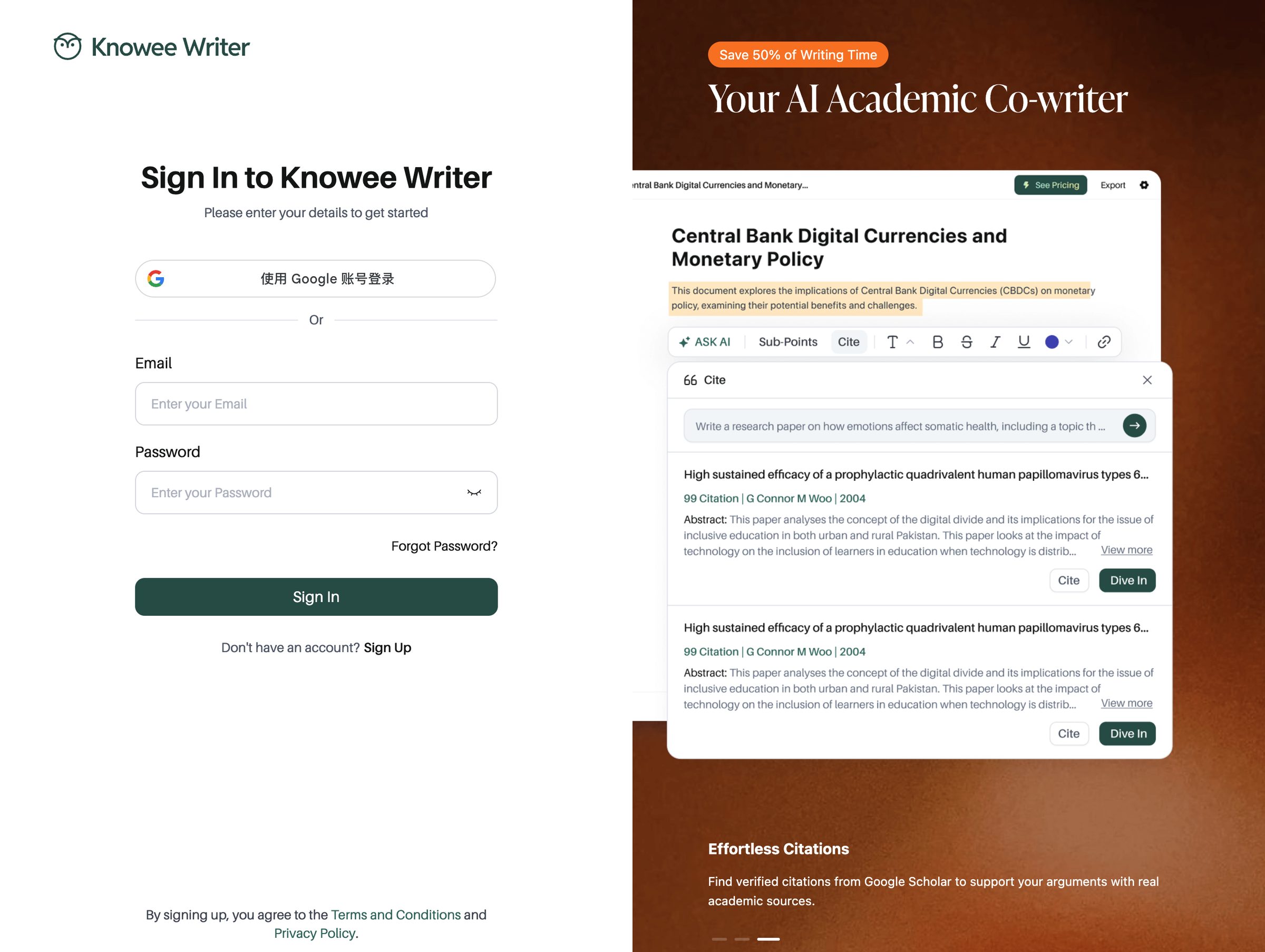
04 — Writer app
Sign in, then disappear
The sign-in lives inside the brand world — a calm cream panel on the left, the product's actual interaction (Cite, Sub-Points, Ask AI) playing on the right as a continuous poster. It doubles as the last marketing frame before commitment.
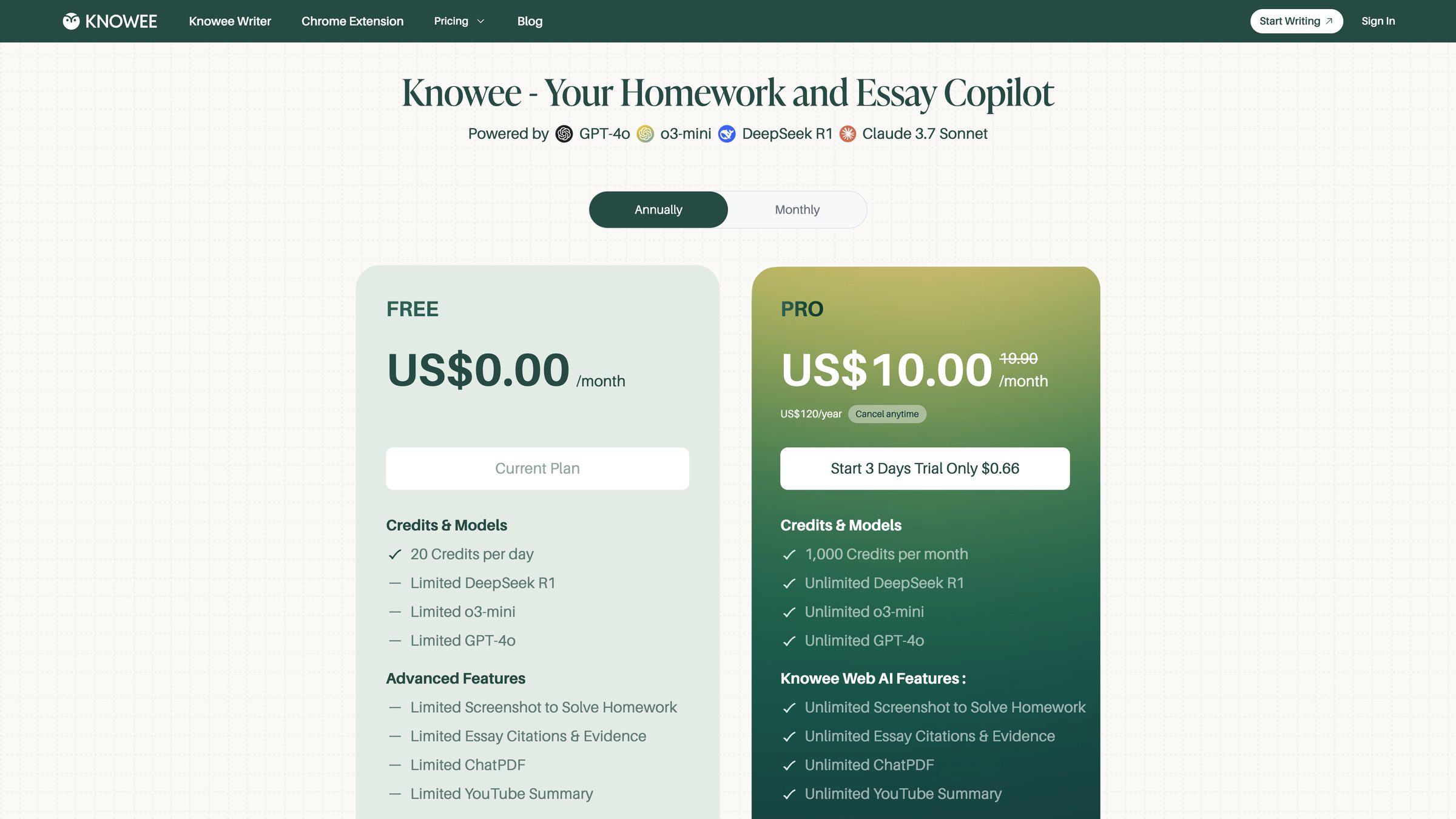
05 — Paywall
Transparent engine, transparent price
Two tiers, no dark patterns. The engines (GPT-4o / o3-mini / DeepSeek R1 / Claude 3.7 Sonnet) are named above the price table. "Start 3-day trial, $0.66" replaces the usual hard paywall. Annual / monthly toggle, cancel anytime in one line.
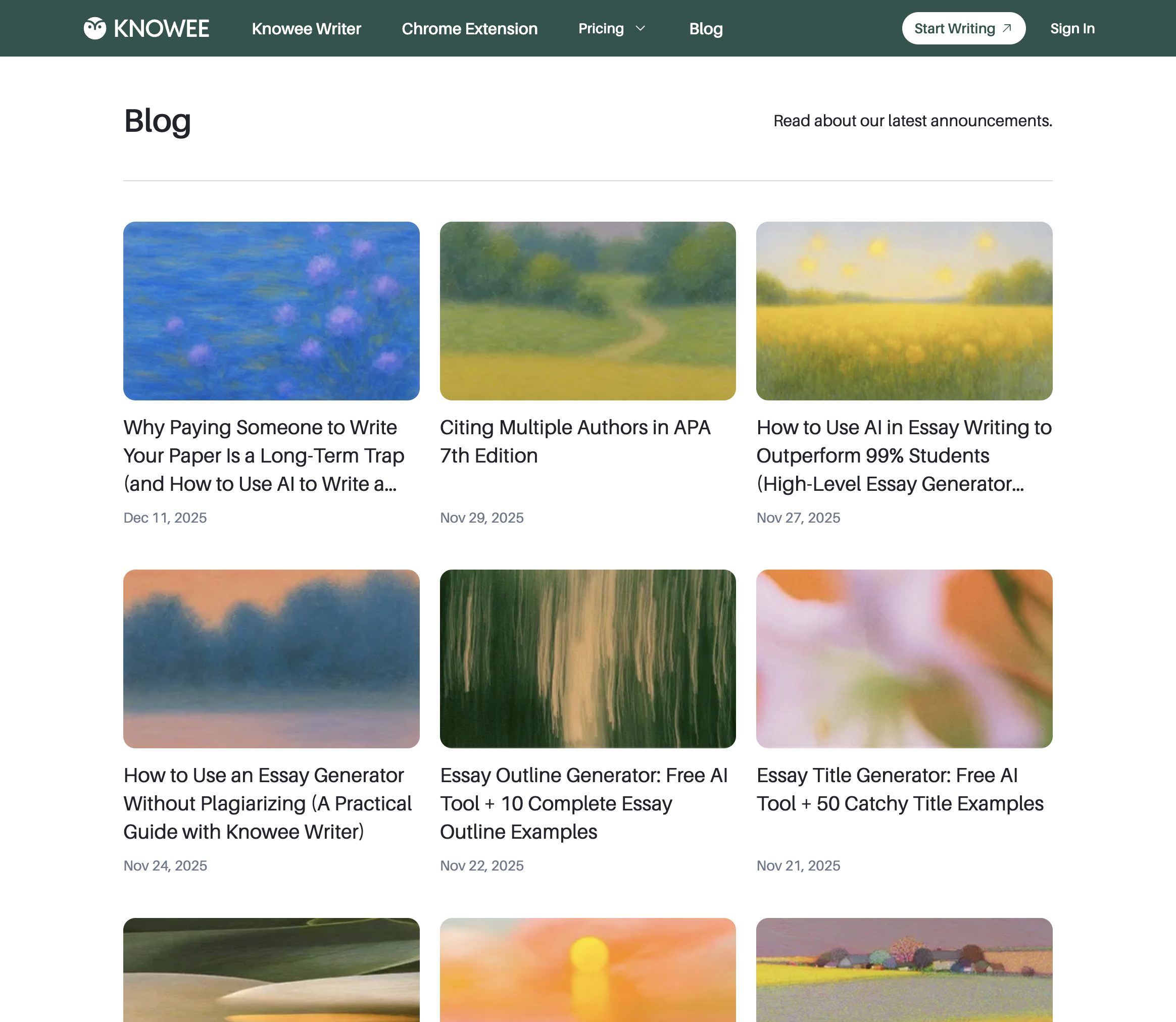
06 — Editorial system
The blog as system, not afterthought
Each blog cover is a commissioned painterly still — not a stock photo, not a gradient. The editorial rhythm of the product (serif voice, generous space, single focal image) carries into long-form, so the reader never feels they've left the brand.
Action
Key design moves
- 01
Put the AI seam at the cursor, not in a sidebar
Most AI writing tools pile actions in a right-hand panel. That geometry says "the AI lives over there; the writing lives here." I moved every action — Ask AI, Sub-Points, Cite, Reference List — above the current text selection. The AI now enters the writer's visual foveal zone only when summoned by a selection, and leaves when they deselect. It sounds small. It's the whole product.
- 02
Brand as positioning, not decoration
Most "AI for essays" products arrive in a pastel gradient and a grinning emoji. I went the opposite direction: Instrument Serif italics, walnut and sage, the typographic pacing of a journal. The brand is doing a specific job — it's telling the user "this is a tool for people who care about writing" before a single feature loads. When positioning travels through type and colour, the marketing page can drop the hard-sell and let the product speak.
- 03
Citations as product primitives, not a feature
"AI with citations" is a feature; "every AI response can become a citation with one click" is a primitive. I rebuilt the response shell so that every sub-point, every Ask AI result, every reference card carries the same action surface: Dive In, View More, Cite, Insert. Five citation formats (APA, MLA, Harvard, IEEE, Chicago) sit behind a dropdown so the student picks their style guide once and forgets it. Trust stopped being a paragraph in the marketing page; it became a button on every response.
Results
What changed — and how design earned it.
01
User & business outcome
Knowee stopped being perceived as a study shortcut and started being usable for actual academic writing. The three things that were killing the category — hallucinated citations, untrusted brand, fragmented surfaces — each got a specific structural answer instead of a marketing one.
02
How design delivered
A selection-anchored AI pattern + an editorial-grade brand + a citation primitive shared across every response. Together they reposition Knowee from "an AI chatbot a student uses" to "the editor a student writes in." That shift happened in the geometry of the product, not in the copy.
03
Leverage for the team
- 01
Turned the 'AI for essays' conversation from 'is this safe?' into 'is this well-cited?' — letting the product be sold on craft, not on loopholes.
- 02
Gave the team a shared vocabulary (selection · evidence · insert) that now drives new-feature scoping — design, eng and copy all point at the same thing.
- 03
Left a brand system (type scale, palette, motion curves, response-card primitives) that the next product surface can inherit instead of reinventing.
- 04
Validated a premium pricing tier that matches the new brand's ambition — the product finally looks worth what it's asked to be paid for.
Narrative — Reflection
What this project leaves me with.
The most useful thing I learned on Knowee is that AI product design is almost entirely a question of where you put the seam. The model is a commodity; the seam is the product. Move the seam from a sidebar to the cursor and you change the whole relationship.
The second thing is that brand work inside an AI product is usually underrated. Teams treat it as marketing varnish. It isn't — it's a signalling mechanism for which users you want to keep. A product that takes writing seriously has to look like it takes writing seriously; otherwise every feature ends up under-priced and under-used.
If I had another lap, I'd push harder on the mobile side. The current mobile is serviceable; the real opportunity is a "write on the bus, finish on the laptop" continuity layer — selections, citations and drafts as portable objects. That's the next seam.